Top dance styles that anyone can learn for free from basics
check the below details to know how to learn for free
Hip Hop Dance is a style of dance with deep historical and social roots in African American culture. It's a part of a whole culture of Hip Hop, which started in the 1970's in the Bronx, New York. The Bronx in the 70's was a rough, dangerous place to grow up. The youth were surrounded by drugs, crime, poverty, gang violence, and overall struggle.Yet they, particularly the African American and Latino youth (minority groups), were at best neglected by mainstream institutions. Desperate for a way to escape their everyday struggles, they invented their own art forms.These art forms, which the youth embodied in the way they dressed, talked, moved, and expressed themselves, soon became a lifestyle. A way to live. This lifestyle and culture became known as Hip Hop.Despite the negativity and tumult in the South Bronx, Hip Hop heads were able to rise above their environment and create a positive form of release. Instead of substances and violence, their energy was redirected to values like originality, creativity, identity, respect, and community.The same way that our religious, ethnic, familial backgrounds inform our way of being in the world, Hip Hop was the way that people could be in a way that felt right to them. Deejaying, Emceeing, Breaking and Dancing, and Graffiti weren't just hobbies, they were sanctuaries. As much as the art forms within Hip Hop have evolved over the decades, the core tenants of the culture remain. "Hip" = present "Hop"= action. Hip Hop is a movement that represents the freedom to learn, grow, and evolve. It is still the same movement it was in the 70's – the one that gave the inner-city youth the motivation to live a better life
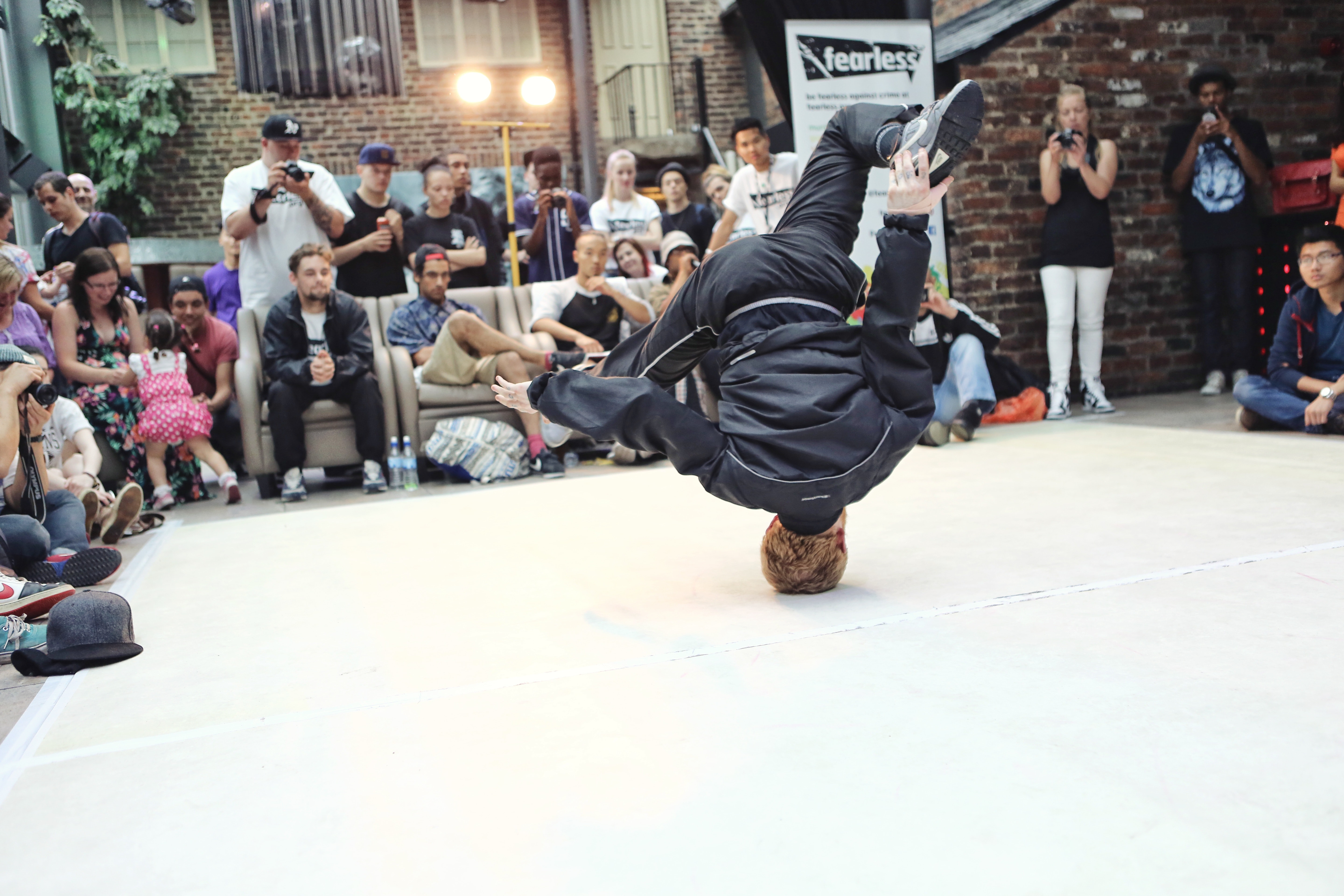
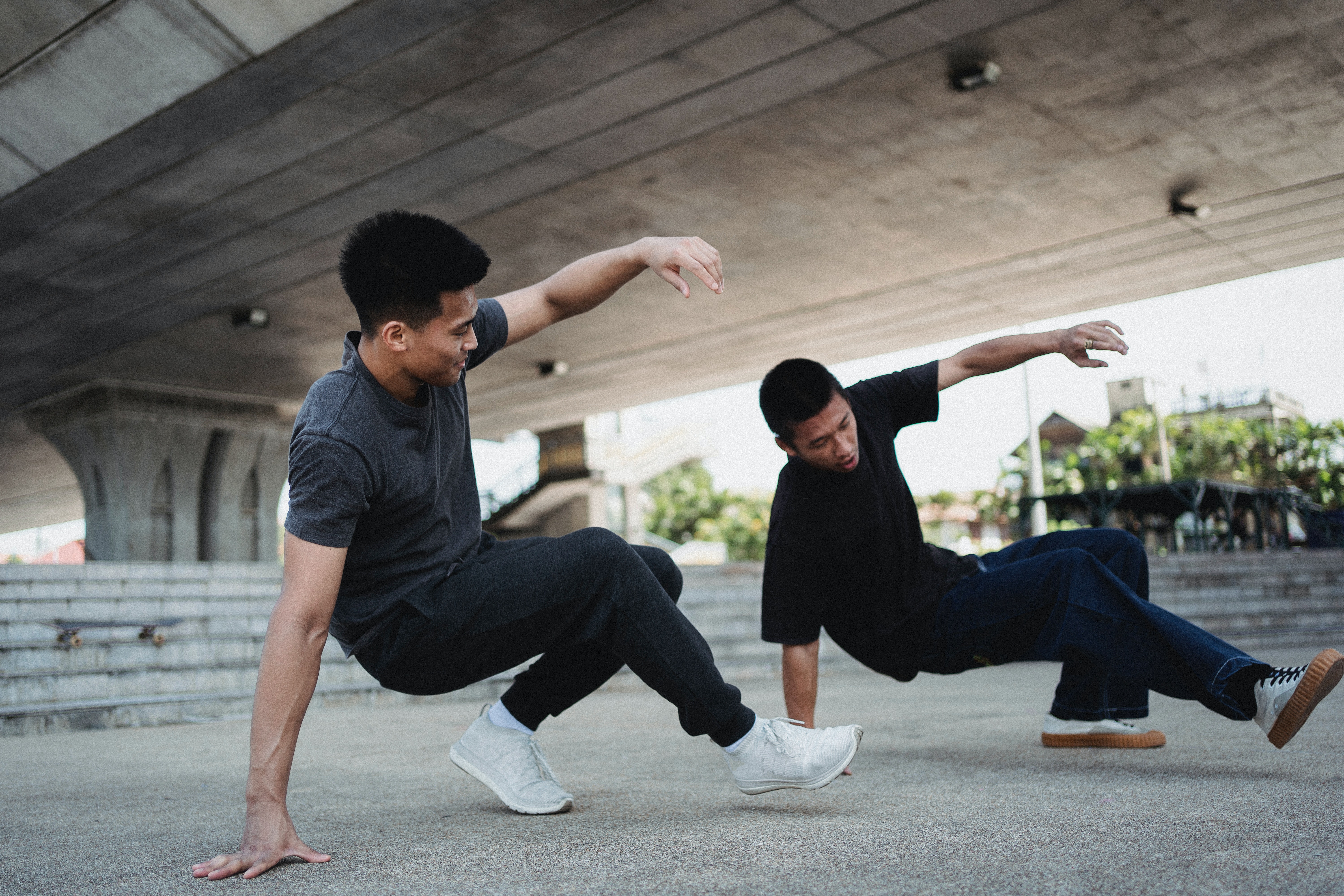
Break dancing, also called breaking and B-boying, energetic form of dance, fashioned and popularized by African Americans and U.S. Latinos, that includes stylized footwork and athletic moves such as back spins or head spins. Break dancing originated in New York City during the late 1960s and early ’70s, incorporating moves from a variety of sources, including martial arts and gymnastics. The term break refers to the particular rhythms and sounds produced by deejays by mixing sounds from records to produce a continuous dancing beat. The technique was pioneered by DJ Kool Herc (Clive Campbell), a Jamaican deejay in New York who mixed the percussion breaks from two identical records. By playing the breaks repeatedly and switching from one record to the other, Kool Herc created what he called “cutting breaks.” During his live performances at New York dance clubs, Kool Herc would shout, “B-boys go down!”—the signal for dancers to perform the gymnastic moves that are the hallmark of break dancing.
The beginning of Locking can be traced to one man, Don Campbell. In the late 1960s he put together several fad dances adding moves of his own (known as the "Lock") when performing. The original lock was created by accident: Don Campbell couldn't do a move called the 'The Funky Chicken' and stopped at a particular point whilst moving his arms, creating a 'locking' effect. He wasn't able to perform it fluently, for he couldn't remember which step to take next. (Even the acting towards the audience was spontaneous: when people started laughing at Don because of his unfamiliar moves, he responded by pointing at them.) These halts soon became popular as Don added them into his performances. The resulting dance was called Campbellocking, which was later shortened to Locking. In the early 1970s this set off a movement of Locking dance groups, notably Campbell's group The Lockers. Another locker called Jimmy "Scoo B Doo" Foster and Greggory 'Campbellock Jr.' Pope and others set the foundation for locking dance and clothes style. Clothes style can consist of loud striped socks, pegged pants that stopped at the knees, bright colorful satin shirts with big collars, big colorful bow ties, gigantic Apple Boy hats, and white gloves. Later locking became part of the growing hip hop dance culture, and has influenced styles such as popping, B-boying and liquidizing. Locking is still quite popular. Dancers are trying to keep it alive.
House dance it’s a modern dance style. It has been origin from the name of a style of electronic music in Chicago in the early 80s. The name of the style comes from the club Warehouse where in the first DJs started playing house music. It’s easy to know house dance by intricate rapid and forceful movements of the legs in combination with smooth and relaxed body groove. An apparent easy manner of house dancers is a result of long trainings which allow impressing people and getting real satisfaction from merge of movement and music. House DanceHouse dance it’s a modern dance style. It has been origin from the name of a style of electronic music in Chicago in the early 80s. The name of the style comes from the club Warehouse where in the first DJs started playing house music.It’s easy to know house dance by intricate rapid and forceful movements of the legs in combination with smooth and relaxed body groove. An apparent easy manner of house dancers is a result of long trainings which allow impressing people and getting real satisfaction from merge of movement and music.As a social dance which have been formed at parties house incorporates elements of many styles. Those styles gave it a rich variety of movements and ways of self-expression.An important role in the formation of house has played African and Latin dances, also martial arts, vogue, waacking and break dance. In the end of 80s many hip-hop dancers started to get involved in house. This style combines lot of components of hip-hop culture, which is reflected at the basis of dance, in music, manner, terminology, and even in outfit.In the basis of house lays an improvisation while the rhythm dictates a fast and complicated foot movement with smooth body movements. The basis of house dance consists of 3 main elements - footwork, jacking & lofting.Jacking it’s a wavy body groove starting from the hips. It makes the body shake into a music rhythm and move the whole body and to control a center of mass. In honor of this movement are named such house-tracks as: «Jacking all night long», «This is jack house», «Time to jack», «Jack your body» etc.Footwork is the fastest part of house dance. Footwork it’s a combination of movements of legs with jumps and rolls. Those movements house take from different styles such as tap, salsa, breaking and of course afro dances.Lofting is a slow and drawling part of house dance. It has been born in the New York club TheLoft and takes its name from here. Torques, waves and acrobatic tricks came from b-boying and capoeira.Founders and outstanding dancers of house dance:Ejoe Wilson, Brian "Footwork" Green, Tony McGregor, Marjory Smarth, Caleaf Sellers, "Brooklyn" Terry Wright, Shannon Mabra, Tony "Sekou" Williams, Shannon Selby (aka Shan S), Voodoo Ray, Chris Sawyer and others.
Popping is a street dance adapted out of the earlier Boogaloo cultural movement in Oakland, California. As Boogaloo spread, it would be referred to as Robottin in Richmond, California, Strutting movements in San Francisco, California & San Jose, California, and the Strikin dances of the Oak Park community of Sacramento, California which were popular through the mid-1960s to the 1970s. Popping would be eventually adapted from earlier Boogaloo movements in Fresno, California in the late 1970s by way of California high-school gatherings of track & meet events - the West Coast Relays. The dance is rooted through the rhythms of live funk music, and is based on the technique of Boogaloo's posing approach, quickly contracting and relaxing muscles to cause a jerk or can be a sudden stop in the dancer's body, referred to as a pose, pop or a hit. This is done continuously to the rhythm of a song in combination with various movements and poses.It was popularized by a Fresno & Long Beach-based dance group called the Electric Boogaloos that mixed popping techniques to boogaloo.Closely related illusory dance styles and techniques are often integrated into popping to create a more varied performance. These dance styles include the robot, waving and tutting. However, popping is distinct from breaking and locking, with which it is often confused. A popping dancer is commonly referred to as a popper.
Waacking is a form of dance that originated in the gay clubs of the 1970s in California from the African American and Latinx population. The dance has also been known as “Punking”, with some of the originators claiming that the name was a way of taking ownership of a negative term (as the term “punk” was a derogatory term for gay men in the 70s) and giving it a positive connotation. Waacking reached its peak during the 70s and then slowly dwindled from the clubs as disco fell from the mainstream and the AIDS epidemic hit the world - taking a lot of originators along with it. The remaining originators who did survive remained dormant until the dance had a resurgence in the early 2000s - with originators such as Tyrone “the Bone” Proctor, who was on Soul Train, and Viktor Manuel, who danced for Grace Jones - coming out of retirement to train the next generation of pioneers from around the world in the scene.
Krump is a dance direction and style of music. The Krump Dance Style, is a street dance characterized by energy, sharp movements, expressive character, and aggressive presentation. But despite all of its sharpness and speed, Krump is not a dance of hatred as many people sometimes think. It is a peaceful dance that has a deep philosophy and complex history of origin. Krumping evolved from the clowning dance style that emerged in the ‘90s. In 1992, Thomas Johnson, also known as Clown Thomas, formed a group of dancers who danced the so-called clowning dance. The style was especially popular among children and teenagers because the movements were fiery and energetic. The group often took part in social events or children’s holidays, and during their performances, the group members painted their faces with bright colors.
Also known as, ‘Getting lite’, Litefeet is a style of street dance that emerged from Harlem, New York in the early 2000s. Originally performed in the subways of New York, this style of dance has moved from subway to mainstream culture. This high energy style has now become increasingly popular in the street dance scene, with iconic moves such as the: Harlem Shake, Rev up, Chicken Noodle Soup, Bad One and Lock In, to name a few. The term 'litefeet' originates from dancers being light in their feet, dancing as if they are weightless. Alongside the dance style, there has also been a rise in Litefeet music; where the upbeat hip-hop beats allow ‘litefeeters’ to express their movement and build up their Lock ins. Well known collectives include: W.A.F.F.L.E, Brotherhood and 2Real Boyz just to name a few. Litefeet is now described as also being a culture, who has influenced famous musician, Chris Brown.
after learning any style from the above and to test your basics learn these choreographies
Freestyle dancing is a style of physical movement,freeing your movement by using all your body and just flow with the music , that isn’t choreographed or planned ahead of time. It occurs in many genres, including those where people dance with partners . . . . .
Read Full Article HereWhether you’re a beginner or an advanced dancer, having good stability and balance enables you to move through your motions more quickly and fluidly. While it looks easy, your base of support constantly changes when you’re dancing. . . . .
Read Full Article HereFirst thing, when you battle, make sure you’re looking, giving your attention mainly to your opponent, especially when you start. You don’t want to be dancing and looking at your feet. . . . .
Read Full Article Here